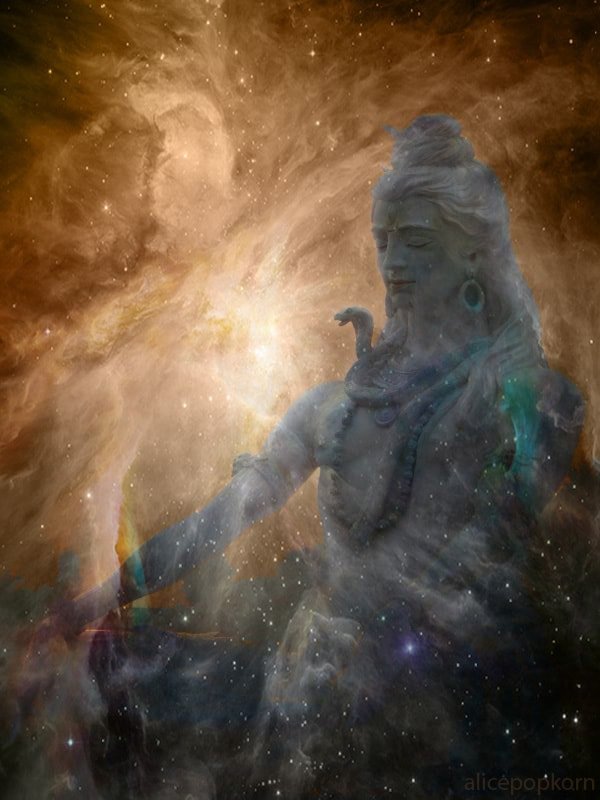
When the light disappears

We are now in the feast of Diwali. This is a feast when the goddess Lakshmi is called upon as love, abundance, and light.

This time when that darkness takes over more and more, lights are lit for hope of the return of light and goodness.

There is a myth about how the inner darkness occurs and how this quality/energy of light and abundance is lost.

The history is about the king of the gods; Indra. Indra had the natural arrogance that often comes with status and power, but which everyone can be guilty of.  

One day, Indra was met by a holy man called Durvasas. This man came with a garland of flowers that materialized in front of him in meditation. He said, “Indra, Indra! This garland manifested itself in front of me in meditation. It contains the very essence of sri (another name for Lakshmi and the word for what she embodies). I was told to give it to you.

“Indra receives the garland, but before the holy man goes, he sees Indra putting the garland around his elephant’s neck. This sign of disrespect makes Durvasas curse him. “The way you disrespeketed Sri, she will abandon you.” In this moment, the whole world lost its luster, and all love and abundance disappeared.

The story goes on with Vishnu being asked to bring Lakshmi back. She has returned to the source of all things: an infinite sea of milk. This begins the story of the churning of the primordial sea, to regain Lakshmis love and abundance to the world.

Based on the understanding of Lakshmi/Sri as what has been lost, one can understand the amrita for which the primordial sea of milk is churned, as the quality of sri-love and abundance, which Lakshmi personifies.

Disrespect for this quality has resulted in asuras (gods of darkness), representations of darkness and unconsciousness, taking over the world. This is done in the story through a war in which asuras wins over devas (gods of light), when devas has lost their vitality.

Internally, it happens when the less conscious, less truthful parts of the personality take over.
Similar Posts

  • Ma!

    The Navaratri of spring is approaching. The 9 nights of Navaratri are sometimes divided into three parts. Three nights for the invocation of Durga, three for the invocation of Lakshmi and three for the invocation of Saraswati.  Durga is the aspect of the Goddess in its entirety; Mahadevi, who is summoned to fight Mahishasura in…

  • Sri Yantra

    What happens when contraction and expansion take place at the same time? Perhaps it is these circumstances that can create something truly new. A contraction to a nothing/ a small still point of concentrated energy, and then an explosion into a new creation. The Tantric tradition speaks of prakasha and vimarsha. Prakasha is the unmanifest…

  • Yoga as a truth-seeking

    Tantra speaks of the actions of “the All”, which are also the individual’s 5 powers. These are: Srsti-creation Stihiti-stasis Samhara-dissolving Tirodhana-forgetting, veiling Anugraha-unveiling, remembrance These actions are the acts of consciousness. Consciousness can create a thought, hold on to a thought, let a thought dissolve, and can forget something by dropping the focus on it….

  • Together in love

    It is said in the Tantric tradition that “The Source” contains all the potentiality possible. It is also said that the purpose of the manifestation is to make the great consciousness aware of itself. In other words, a self-reflective process. Consciousness is referred to here as prakasha (the great light) and the reflection process as…

  • To bear his pain

    The new moon 23/2 falls in the area of the sky called Shatabhisha nakshatra. Shatabisha means 100 healers. It is a time that benefits healing from illness or trauma. Mercury has a strong influence this time as well, making old pain prone to coming to the surface.  The tantric exercises aimed to release energy that…

  • Living your dharma

    Psychoanalysis talks about sublimating traumas. This means allowing our lives to take the direction of working with our traumas. We often choose jobs and engagements that are linked to our traumas. If this is done unconsciously, it is called repetition compulsion, and leads to actions that forces us to repeat our original trauma time and…